What are protective coatings for infrastructure steel?
Protective coatings for infrastructure steel are multi-layer paint systems applied to bridges, flyovers, metro structures and similar steel. They usually combine blast-cleaned steel, an epoxy primer, a high-build epoxy coat and a polyurethane topcoat. Together they resist rain, sun, dust and traffic pollution for many years.
Delhi NCR is building and maintaining steel at a large scale: flyovers and foot overbridges, metro viaducts and stations, elevated corridors, railway structures, warehouse parks and industrial sheds. Once this steel is erected, repainting it is slow, costly and disruptive. That is why protective coatings for infrastructure steel are specified carefully, and why the first coat has to be right. This guide explains the thinking behind these systems for EPC contractors, fabricators, consultants and facility managers who work in the region.
This is general guidance. Every project has its own specification, and the product data sheet always decides application details.
Why infrastructure steel needs a proper coating system
Infrastructure steel faces a long list of enemies at once. In Delhi NCR the main ones are:
- Heat and UV. Summer temperatures above 45 C and strong sun fade and chalk weak topcoats.
- Dust and smog. Fine particles settle on horizontal surfaces and trap moisture, especially in winter.
- Monsoon humidity and rain. Water sits in joints, bolt groups, box sections and drain areas.
- Traffic pollution. Exhaust and road grime deposit on bridge girders and piers near busy roads.
- Industrial air. Structures near industrial belts such as Sahibabad, Loni, Surajpur and Manesar can see chemical fallout.
- Mechanical damage. Transport, erection and maintenance work chip the paint.
Inspection and repainting of elevated steel needs traffic management, access equipment and permits. A coating that lasts longer often saves far more than it costs extra at the start.
The standard layered approach
Most heavy-duty systems for steel follow the same pattern. Each layer has a clear role.
| Layer | Role | Coating type |
|---|---|---|
| Primer | Adhesion and first corrosion protection | Epoxy primer (Penguard family), or a zinc-rich type where the specification calls for it |
| Intermediate | Thickness and moisture barrier | High-build epoxy (Jotamastic family) |
| Topcoat | UV and colour retention, weather resistance | Polyurethane (Hardtop family) |
Where a specification asks for zinc silicate or another specialist primer, VTech will confirm the matching Jotun product and availability from the range on the call. We do not guess product names, and we will not claim a suitability the data sheet does not confirm.
Epoxy coats protect well but chalk in strong sunlight. That is why a polyurethane topcoat is placed over them on exposed steel. It keeps colour and gloss, and shields the epoxy below. See our protective coatings page and the product range for the families we supply.
Choosing protective coatings for infrastructure steel by corrosivity
Specifications often use ISO 12944 corrosivity categories to describe the environment, written from C1 for very mild to C5 for very aggressive air. In general, a harsher category calls for a thicker system and, in some cases, a different primer. Higher durability expectations also call for a more demanding system.
The category is a general guide. It is not a product recommendation. Two bridges in the same category can still need different systems because of their details, such as crevices, box sections or traffic load. The consultant or owner sets the final system.
| Question | Why it matters |
|---|---|
| What is the environment category? | Sets the general thickness and system level |
| What is the expected time to first major repaint? | Drives system choice and cost |
| Will painting be in the shop, on site, or both? | Shop work is more controlled; site work needs weather planning |
| Is the structure new or existing? | Existing steel needs rust and old paint assessment |
| Is there a fire protection requirement? | May need an intumescent system over a compatible primer |
Surface preparation on infrastructure steel
For new fabricated steel, abrasive blast cleaning is the usual start, often to Sa 2.5 in ISO 8501-1, with a suitable surface profile for the primer. Blasting is done in the fabrication yard where dust and spent abrasive can be controlled. Fabricators should also grind welds smooth, round off sharp edges, and remove spatter. Sharp edges are where paint is thinnest and rust starts first.
For maintenance of existing structures, preparation depends on the access and the location. Over a live road or railway, blasting may not be allowed. Power tool cleaning, vacuum-shrouded methods or hand tools may be the only options, and the repair system must be chosen for that grade of prep. Always check the data sheet for the primer’s minimum prep requirement.
Contamination checks
Steel stored outdoors in the monsoon or near industrial air may pick up salts and dust. Salts left under paint can draw moisture through the film and cause blisters. Many specifications ask for a check on surface cleanliness before priming. Ask your inspector what limits the specification sets, and how they will be measured.
Shop versus site application of protective coatings for infrastructure steel
Large infrastructure jobs usually combine both. Understanding the split helps you plan.
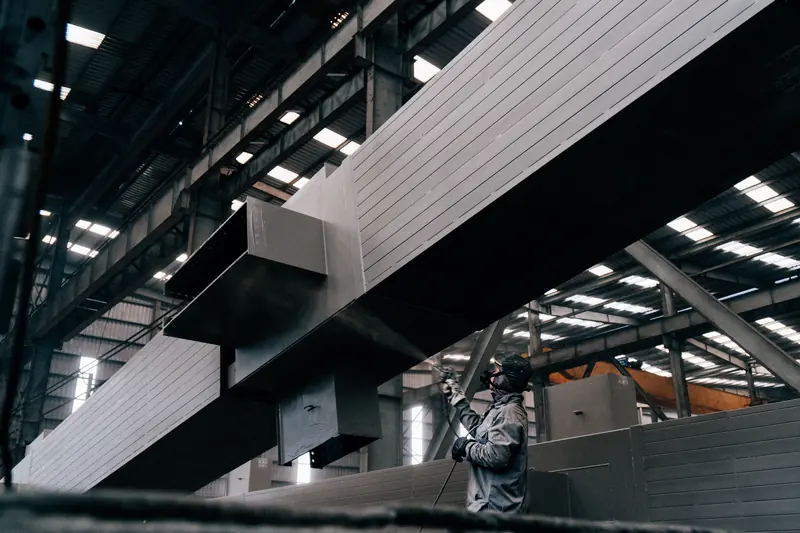
- Shop work: blasting, primer and sometimes the intermediate coat are applied in the fabrication shop, where conditions are controlled and quality is easier to check.
- Transport and erection: damage from lifting, slings, bolting and welding is unavoidable.
- Site work: touch-up of damaged areas, coating of bolted joints and field welds, and the final topcoat.
Check that the primer and the later coats stay within their overcoating windows during this journey. Long gaps between shop primer and site topcoat are common on big projects, and the data sheet will state how long the primer can be left before it needs cleaning or roughening. Erection schedules in Delhi NCR also face weather and traffic constraints, so have a plan for damaged primer. Contaminated, chalked or weathered primer may need cleaning before the next coat.
Bolted joints and connections
Bolted connections are weak points. Faying surfaces, bolt heads, nuts and washers need a clear plan. Some joints need specific coatings for friction grip. The structural engineer decides this. After tightening, coat the exposed bolt heads and edges with a stripe coat and the full system.
Quality control for protective coatings for infrastructure steel
Infrastructure clients tend to ask for a documented trail. Be ready with:
- Records of surface preparation grade and profile at each stage.
- Ambient conditions on the day: air temperature, humidity, steel temperature and dew point.
- Batch numbers and expiry dates for all paint used.
- DFT readings per coat and for the total system, with locations.
- Inspection and hold point sign-offs by the client or consultant.
- Repair records for any damaged areas and how they were fixed.
These records are not paperwork for its own sake. When a defect shows up three years later, the records help trace whether it was a prep problem, a thickness problem or a product problem.
Common mistakes on bridge, metro and shed steel
- Painting in humid or dewy conditions and trapping moisture under the film.
- Leaving shop primer exposed for too long before overcoating.
- Missing the stripe coat on edges, welds and bolts.
- Treating site touch-up as minor work and using the wrong product on damaged areas.
- Skipping inside faces of box girders and the back of angles because access is awkward.
- Ordering too little paint, then stretching it thin to finish the job.
- Mixing different brands in one system without checking the data sheets for compatibility.
Planning supply for large infrastructure packages
Big jobs using protective coatings for infrastructure steel consume large quantities of paint over many months. Supply planning avoids stoppages. Consider these points:
- Break the total area into packages with dates, so that deliveries can follow the erection plan.
- Keep batch continuity where colour matching matters across a long structure.
- Store paint in covered, ventilated space away from direct sun, and watch shelf life.
- Allow for wastage on rough steel, spray losses and touch-up.
- Confirm stock with the supplier early. Availability depends on stock at the time.
VTech is an authorised Jotun distributor and dealer based at Sahibabad, serving contractors and plants across Delhi, Noida, Greater Noida, Ghaziabad, Gurgaon and Faridabad since 2011. Read more about us or see how we support fabricators and EPC teams on the industrial solutions page.
Maintenance after handover
A coating is not finished the day it is applied. Plan inspections after the first monsoon and then at regular intervals. Look for chalking, fading, rust at edges and bolts, blistering and mechanical damage. Fix small damage early with a compatible repair coat, since a small chip can become a patch of rust in a single season. Keep the coating records and the colour references so that repairs match.
How to get started: what to tell us when you call
Ring call +91 98111 70042 between 10am and 6pm, Monday to Saturday. Share as much of this as you have:
- Type of structure: bridge, flyover, metro element, foot overbridge, platform, shed or tower.
- Total area in square metres, and the planned packages or phases.
- New fabrication or maintenance of existing steel.
- The specification, corrosivity category and durability target, if given.
- Whether coating will be done in the shop, on site, or both.
- Surface preparation method and any limits on blasting.
- Fire protection needs, if any.
- Delivery location in Delhi NCR and the schedule.
We will confirm the matching Jotun products and availability from the range, and quote prices on the call. You can also write through the contact page or email sales@vtechsolution.co.in with your specification.
Frequently asked questions
What coating system is used on bridge and flyover steel?
Most use blast-cleaned steel, an epoxy or zinc-rich primer, a high-build epoxy coat and a polyurethane topcoat. The exact system comes from the project specification. VTech confirms the matching Jotun products and availability on a call.
Why is a polyurethane topcoat used over epoxy?
Epoxy protects well but tends to chalk and fade in strong sunlight. A polyurethane topcoat keeps colour and gloss outdoors and shields the epoxy underneath. This matters on Delhi NCR structures that face summer sun at over 45 C.
What does ISO 12944 category C4 or C5 mean?
These are corrosivity categories describing how aggressive the air is, with higher numbers meaning harsher conditions. They guide system level and thickness but are not a product recommendation. Your consultant sets the final system.
Should steel be painted in the shop or on site?
Usually both. Blasting and priming in the shop gives better control. Site work covers touch-up, bolted joints, field welds and the topcoat. Check the primer's overcoating limits so it is not left exposed for too long on site.
Can VTech supply large quantities for infrastructure packages?
VTech supplies authorised Jotun coatings from Sahibabad to contractors across Delhi NCR. Availability depends on stock, so please share your quantity and schedule early. We confirm the products, availability and prices on the call.