What does an epoxy primer do and why is it needed?
An epoxy primer is the first coat in an epoxy system. On concrete it penetrates, binds dust and seals pores; on steel it bonds to the metal and starts corrosion protection. It gives the main coat a firm base, preventing peeling, pinholes and early failure.
When a floor or steel structure fails early, owners usually blame the finish coat. In most cases the real problem sits underneath: the primer was skipped, thinned too much, applied on a damp surface or left too long before recoating. A good primer costs a small part of the total job, yet it controls adhesion, sealing and long-term life. This guide explains what primer does on concrete and on steel, how to select and apply it, and how to avoid the mistakes we see on NCR sites from Sahibabad to Manesar.
What an epoxy primer actually does
A primer is not just a thin first layer of paint. It has specific jobs that the main coat cannot do.
- Adhesion. It bonds to the substrate and gives later coats something to hold on to.
- Penetration and consolidation. On concrete, low-viscosity primer soaks into pores and locks fine dust and weak surface particles in place.
- Sealing. It closes the pores so that air trapped in the concrete does not bubble through the main coat, which causes pinholes.
- Corrosion protection. On steel, certain epoxy primers form a barrier layer, and zinc-rich primers add active protection.
- Uniform absorption. It evens out porous and non-porous patches so the topcoat dries with a consistent look.
Epoxy primer on concrete floors
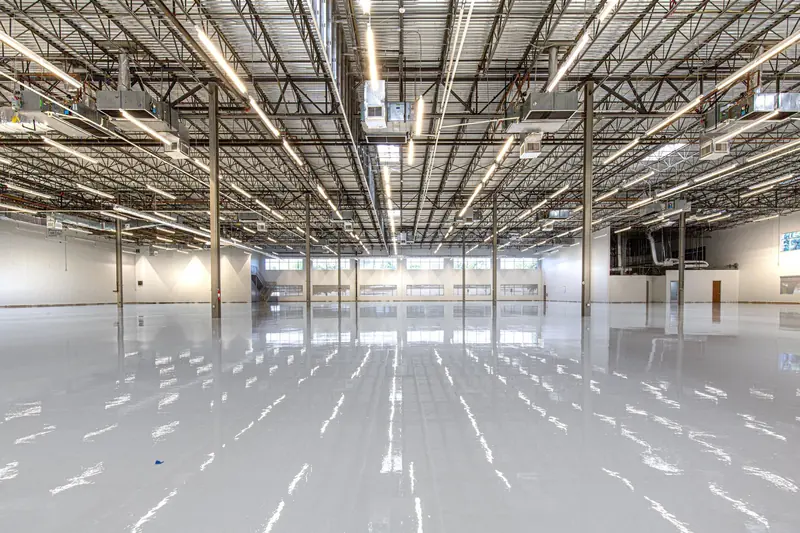
Concrete is porous and full of tiny air pockets. When you roll a thick coat directly onto bare concrete, air inside the pores expands in the summer heat and pushes out through the wet film, leaving pinholes and craters. A primer reduces this by sealing the pores first. It also strengthens the surface layer, which is especially valuable on dusting floors common in older sheds in Loni and Ghaziabad.
For concrete, a good primer plan includes:
- A sound, ground or shot-blasted surface, free of oil and laitance.
- A moisture check against the data sheet limit. Primer cannot make a wet slab suitable for coating.
- Application by roller or squeegee, worked well into the surface, with no puddles left to pond.
- Waiting for the stated recoat time, then applying the body coat while the primer is still within its window.
- Light sanding or scarifying if the primer has cured past the maximum recoat time.
On very porous slabs, a second primer coat may be needed to avoid starved patches. Check for dull, dry-looking areas after the first coat, and top them up. Jotun’s flooring range under the Jotafloor name includes primers matched to its floor coatings, and VTech can advise on what suits your slab, subject to stock.
Epoxy primer on steel
On steel, primer plays a different but equally important role. After blasting, steel is clean and bright but extremely reactive. In humid NCR weather, flash rust can form in hours. The primer must go on quickly to protect the surface.
- These primers form a tough barrier against moisture and oxygen.
- Zinc-rich epoxy primers add galvanic protection, which helps where coatings may get scratched.
- Primers also give the intermediate coats a compatible base, so the whole system works together.
Jotun’s Penguard range includes primers and coatings used in such systems. The specific product, thickness and number of coats depend on the environment and surface preparation. Follow the system specification and data sheet, not rules of thumb.
Primer on concrete and steel compared
| Point | Primer on concrete | Primer on steel |
|---|---|---|
| Main job | Penetrate, bind dust, seal pores | Bond to metal, start corrosion protection |
| Surface condition | Ground or blasted, dry, clean | Blasted to specified grade, no flash rust |
| Key risk | Moisture, pinholes, dusting slab | Delay after blasting, humidity, missed edges |
| Application | Roller or squeegee, worked into pores | Spray or brush, with stripe coats on edges |
| Check afterwards | Even, glossy, no dry patches | Dry film thickness, coverage of welds |
Why skipping or misusing the primer fails
Think of what happens without it. On concrete, the main coat soaks unevenly into the slab, leaving thin patches and shiny patches. Air bubbles rise through the film as it cures, leaving pinholes that let water in later. The bond to the slab may be only to the loose surface dust, so the coating lifts in sheets under a pallet truck wheel. On steel, a missed primer leaves the metal open to rust underneath the finish coat, which blisters and flakes within a season or two.
These failures do not show up on day one. The floor looks fine for weeks, and trouble appears after the first monsoon or the first heavy load. By then the contractor may have left, and repair means stripping everything. A few thousand rupees spent properly on primer and preparation saves a very large repair bill.
Applying the epoxy primer correctly
Mixing
Primer is a two-pack material. Mix base and hardener in the stated ratio by weight or volume, using a clean paddle on a slow drill. Mix for the full time given on the data sheet, and scrape the sides. Some products need a short induction time after mixing before use. Do not add thinner unless the data sheet allows it, and then only in a small stated amount.
Pot life and temperature
Pot life is the time you have to use the mixed product. At 40 degrees Celsius or more, it can be very short, and the material may begin to thicken while still in the bucket. Mix small batches in summer, keep packs in shade, and pour the mixed primer out onto the floor to avoid heat build-up in a bucket. In cold weather, curing slows and the recoat window stretches, so check temperature and dew point before starting.
Spreading rate and thickness
The data sheet gives a theoretical spreading rate and recommended film thickness. Real coverage on rough concrete is lower than the theoretical figure because the surface absorbs material. Use the data sheet figure as a starting estimate only, and add an allowance for porous or rough areas when you order.
Recoat window
This is the most misunderstood part. If the next coat goes on too early, solvents get trapped. If it goes on too late, the primer is fully hard and smooth and the new coat bonds poorly. Both mistakes cause peeling. Record the time of the primer and plan the body coat within the allowed window.
Primer, sealer and bonding coats: do not confuse them
Buyers sometimes hear three words used for the same thing. They are not identical. A primer is the first coat of a coating system and is chosen to suit both the surface and the coats above it. A sealer is usually a thin, penetrating product used to reduce porosity or dust, and may be used where no further build is required. A bonding coat or tie coat is used between layers that would not otherwise stick well, for example between an old cured coating and a new one. Ask your supplier to name each layer in the system, state the product, the coverage and the recoat window, and confirm that every layer comes from a compatible range. Mixing products from different makers without checking compatibility is a common cause of lifting and wrinkling.
Storage and handling of primer packs
Primer packs are sensitive to heat. Store unopened tins in a cool, shaded room away from direct sun, and never leave them on a roof or in a closed vehicle through an NCR summer afternoon. Check the shelf life printed on the label before use. Keep base and hardener from the same system together, do not interchange lids, and close packs tightly after use. Old or overheated material may thicken, change colour or fail to cure, and it should not be used. Dispose of leftover mixed material and empty cans as the safety data sheet advises, and never pour residues into drains.
Primer checklist before you start
- Surface prepared to the correct standard and photographed.
- Moisture and temperature readings recorded.
- Primer, hardener and thinner (if allowed) from matching batches.
- Tools, rollers and mixers clean and ready.
- Ventilation arranged and ignition sources removed.
- Recoat time noted, with a plan to apply the next coat in the window.
Common mistakes with epoxy primer
- Applying on a damp or contaminated surface.
- Thinning too much, which weakens the film.
- Skipping the primer on dusting concrete.
- Leaving blasted steel unprimed overnight in humid conditions.
- Using a primer not meant for the main coat that follows.
- Ignoring the maximum recoat time.
How to get started: what to tell us when you call
VTech Solution is an authorised Jotun distributor and dealer at Site IV, Sahibabad Industrial Area, Ghaziabad, serving projects across Delhi, Noida, Greater Noida, Gurgaon and Faridabad since 2011. To suggest the right primer, tell us:
- Whether the surface is concrete or steel, new or old.
- Indoor or outdoor exposure, and any moisture or chemical contact.
- The main coat you plan to apply.
- Area in square feet and your working season.
- Present condition: rusted, dusting, damp, or previously coated.
Prices depend on the product, pack size and current rates, and are quoted on the call. Availability depends on stock. Browse our products, see industrial solutions, or call +91 98111 70042 to discuss your system.
Frequently asked questions
Can I skip the primer if the epoxy topcoat is high quality?
No. Even a good epoxy topcoat depends on a primer for bond, sealing and corrosion protection. Without it, pinholes, patchy finish and peeling are likely, especially on porous concrete. Follow the product data sheet, which lists the primer required for the system.
How long should I wait before applying the main coat over primer?
Wait for the minimum time and apply before the maximum time stated in the product data sheet. The window depends on temperature, and it shortens in Delhi summers. If the maximum is exceeded, light abrasion or another treatment from the data sheet may be needed.
Is the same epoxy primer used for concrete and steel?
Not always. Concrete primers are designed to penetrate and seal pores, while steel primers are designed for adhesion to metal and corrosion protection, and may be zinc-rich. Use the primer specified for your surface and for the main coat that follows.
Can epoxy primer fix a damp concrete slab?
No. A standard primer cannot cure a damp slab. Moisture must be below the data sheet limit, or a system designed for moisture-affected slabs must be used. Find and fix the source of dampness first, then test again before coating.
Where can I buy Jotun epoxy primer in Delhi NCR?
VTech Solution, an authorised Jotun distributor and dealer in Sahibabad, Ghaziabad, supplies epoxy primers and coatings across Delhi NCR. Availability depends on stock, and prices depend on product, pack size and current rates. Call +91 98111 70042 for details.