What is warehouse floor coating and why does it matter?
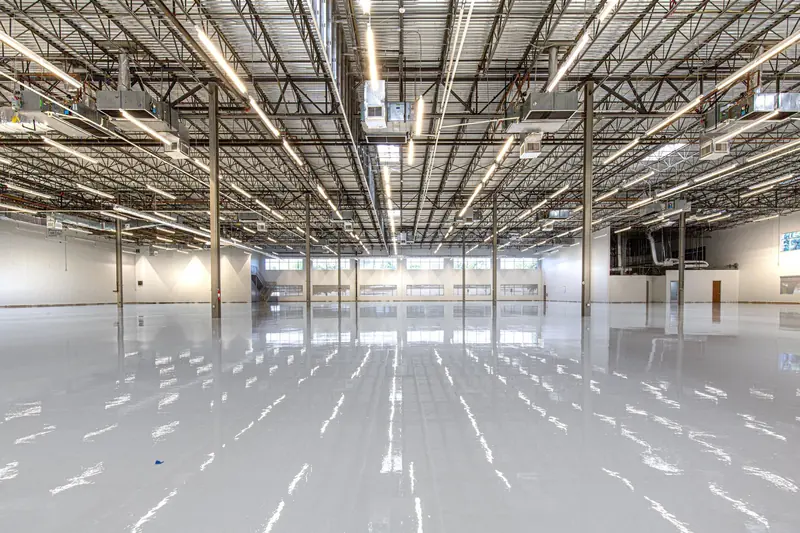
Warehouse floor coating is a protective resin layer, usually epoxy or polyurethane, applied over concrete to stop dusting, resist forklift wear and spills, and give a floor that is easy to clean and mark. It protects stock from dust and extends the life of the slab.
A godown or distribution warehouse in Sahibabad, Loni, Greater Noida or Bhiwadi works its floor harder than almost any other part of the building. Pallet trucks, reach trucks and loaded trolleys run across it all day, while fine concrete dust rises with every pass. A well-planned warehouse floor coating fixes the dust, strengthens the surface and gives you clear, lasting lane markings. This guide covers what to look for, how to prepare the slab, and how to avoid the mistakes we see on NCR sites.
The real cost of an uncoated warehouse floor
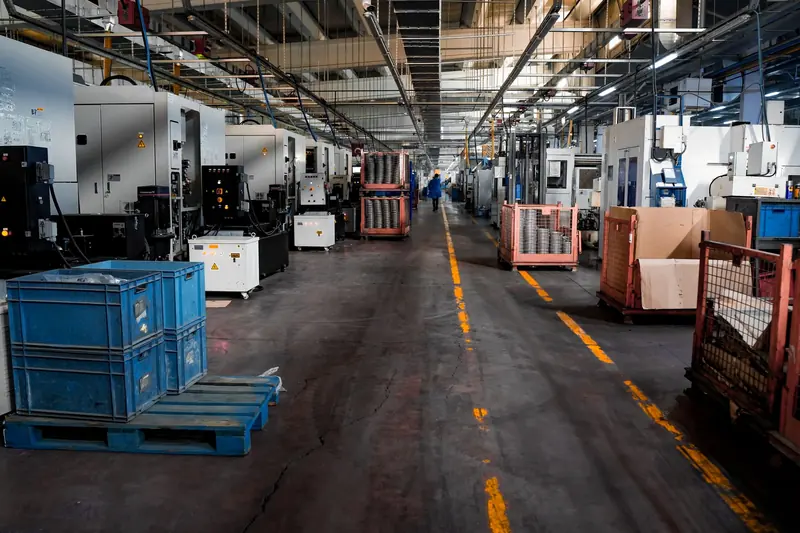
Bare concrete looks cheap because nothing has been spent on it. In practice it costs money every month:
- Dust on stock. Cartons, packaging, electronics and food-grade goods collect grey dust. Customers notice, and cleaning labour increases.
- Damaged wheels and equipment. Loose grit wears down polyurethane wheels and gets into mechanisms.
- Joint breakdown. Pallet truck wheels hit joint edges repeatedly. Unprotected arrises chip, creating a bumpy ride and spilling loads.
- Stains and slip risk. Oil and water soak into the surface, and slippery patches appear near docks.
- Poor visibility. Paint-marked lanes on dusty concrete fade within weeks.
Applying a good warehouse floor coating reduces all of these, and it does so for much less than relaying a damaged slab.
Choosing a warehouse floor coating system
Warehouses do not all need the same specification. A cold store with reach trucks is very different from a spare-parts godown with hand trolleys. Think in terms of traffic first.
Light traffic: thin epoxy coating
For racking aisles used by hand pallet trucks and low movement, a primer plus one or two coats of pigmented epoxy is usually enough to seal the floor and control dust. It is also the budget route for first-time coating.
Medium traffic: build-up epoxy
For mixed-use warehouses with electric stackers and regular pallet movement, a thicker multi-coat build gives better abrasion resistance and a more robust surface for lane marking.
Heavy traffic: self-levelling or mortar systems
Loading bays, dock levellers, turning zones and high-bay reach-truck aisles are best served by a thicker self-levelling or mortar epoxy. These systems take impact and point loads better and keep their shape longer under steel and hard polyurethane wheels.
Sunlit docks and open edges
Where the floor sees direct sun, a UV-stable polyurethane topcoat over epoxy keeps colour and gloss. Jotun supplies floor and topcoat products for these combinations, and our team can suggest what is in stock.
| Warehouse zone | Typical traffic | Coating direction |
|---|---|---|
| Racking aisles, hand-truck areas | Light to medium | Thin or build-up epoxy |
| Reach-truck and stacker lanes | Medium to heavy | Build-up or self-levelling epoxy |
| Loading and unloading docks | Heavy, impact, sun | Mortar epoxy with PU topcoat |
| Packing and staging area | Light, frequent cleaning | Smooth epoxy, possibly slip-resistant |
| Battery charging and wash bay | Chemical splashes, water | Chemical-resistant epoxy system |
Checking the slab before you coat
The slab is the foundation of the coating. A warehouse floor coating can only be as good as the concrete beneath it. Before work starts, confirm these points:
- Strength and age. New slabs need adequate curing time before coating, and the data sheet will give the minimum concrete strength expected.
- Flatness. Very high-bay racking needs flat floors, and a coating will not correct a badly finished slab.
- Moisture. Ground moisture rises through slabs without a damp-proof membrane. Run moisture tests, particularly after the monsoon.
- Contamination. Check for oil near machinery, curing compound residue and old paint.
- Joint and crack plan. Mark every joint and crack, and decide how each will be filled.
Skipping these checks is the main reason new floors lift in patches within a year.
Surface preparation steps that matter
For concrete floors in warehouses, mechanical preparation is the accepted method. Shot blasting or diamond grinding removes the weak top layer and gives a profile the primer can grip. After that, vacuum the dust, repair spalled edges with a suitable repair mortar, and fill cracks. Only then apply the epoxy primer. The primer penetrates, binds loose particles and prepares the slab for the body coat; the data sheet tells you the recoat window to follow. Applying the next coat too late may need re-sanding.
Joints, edges and forklift wheels
Joints are the most abused part of any warehouse floor. Wheels hammer the edges, and a coating that bridges a joint will crack at the same place. A sound plan includes:
- Cutting back crumbled joint edges and repairing them with a hard-wearing repair material.
- Filling movement joints with a flexible, load-bearing sealant rather than rigid epoxy.
- Keeping the coating clear of live joints so that slab movement does not tear the film.
- Inspecting joints every few months and topping up filler early.
Ask your applicator to show how joints will be handled, not just how the main field will be coated.
Seasonal planning in Delhi NCR
Coating a floor is a seasonal job. In May and June, concrete and air temperatures are high and epoxy pot life is short, so mixing small batches and working early in the day is essential. During July to September, humidity and damp slabs invite bubbles and weak bonding. December and January mornings can be cold and foggy, and low temperatures slow the cure. Many warehouse owners find October to November, or February to March, the most comfortable windows for coating. If you must coat outside these windows, increase moisture testing and monitor temperature and dew point on site.
Curing, reopening and keeping the warehouse running
Warehouses cannot close for weeks. Break the job into bays and work in sequence, shifting stock from one zone to the next. Ask for a written plan showing preparation, coating, curing and reopening dates for each zone. Light foot traffic can often resume the next day, but forklifts and loaded pallet trucks should wait until the full cure period in the data sheet has passed. Opening a floor too early dents and scars the film, and the damage shows for years.
Lane marking and finishing touches
Once the coating has cured, aisle lines, pedestrian walkways, bay numbers and hazard zones can be applied directly. Marking over a cured coating lasts far longer than paint on bare concrete. Decide your layout before coating, so that colours and widths are agreed, and so that the main floor colour contrasts well with safety yellow and white lines.
Racking, anchors and heavy point loads
Racking uprights concentrate very large loads on small base plates. Before coating, decide whether the racking is already in place or will be installed later. Drilling anchors through a fresh coating can crack the film around the hole, so it is better to mark racking positions, finish the floor, and then install racking with care. If racking is already standing, the coating plan should work around base plates and leave a neat, sealed edge. Heavy static loads also press into softer coatings over time, so very high racking in cold or hot areas may need a stronger build. Share your racking layout and pallet weights with the supplier during planning, not after.
Cleaning and maintenance after coating
A coated warehouse floor is easy to look after, but it is not maintenance-free. Sweep daily to remove grit, and use a scrubber-drier with soft or medium pads for routine cleaning. Remove oil spills quickly, and avoid dragging steel pallets or sharp metal across the surface. Check the dock edges and joints every quarter, and repair small chips before water gets under the film. After a few years, lanes with heavy wheel traffic may need a maintenance topcoat. Planning this early means you renew only the worn film instead of stripping the whole floor.
Mistakes to avoid when buying a warehouse floor coating
- Quoting by area alone without a site visit or slab test.
- Choosing a thin coat for a reach-truck aisle to save money.
- Painting over dust, oil or laitance.
- Applying during a damp spell.
- Reopening to full traffic early.
- Ignoring joints and edges.
How to get started: what to tell us when you call
VTech Solution is an authorised Jotun distributor and dealer at Site IV, Sahibabad Industrial Area, Ghaziabad, serving warehouses across Delhi, Noida, Greater Noida, Ghaziabad, Gurgaon and Faridabad since 2011. Keep these details ready when you contact us:
- Total floor area in square feet and number of bays.
- Equipment used: hand trolley, stacker, reach truck, loader, and loaded weights.
- New slab or old, and any dampness or cracks.
- Present dust level and what is stored.
- Your preferred shutdown window and colours.
Prices depend on the product, pack size and current rates, and are quoted on the call, with availability depending on stock. See our product range, review our industrial solutions, use the contact page, or call +91 98111 70042 to discuss your warehouse floor coating.
Frequently asked questions
Will a coating really stop dust in my warehouse?
A properly applied epoxy or polyurethane coating seals the concrete surface and stops the cement dust that comes from wear. It will not stop dust that enters from outside, such as smog or road dust, but those are far easier to sweep or scrub from a sealed floor.
How thick should a warehouse floor coating be?
Thickness depends on traffic. Thin coatings suit light aisles, while self-levelling and mortar systems are used for heavy forklift lanes. The right figure comes from the product data sheet and your load, so share your equipment details before choosing a system.
Can I coat the floor while stock is in the warehouse?
Usually not in the same area. Work is planned bay by bay, with stock moved to a finished or neighbouring zone. Fumes, dust from preparation and curing time make it impractical to keep goods in the working area.
How long before forklifts can use the new floor?
Light foot traffic may be possible after about a day, but forklifts and loaded trucks should wait for the full cure stated in the data sheet, which is often several days and depends on temperature and system. Ask your applicator for a written reopening schedule.
Does VTech supply flooring products for warehouses?
Yes. VTech is an authorised Jotun distributor and dealer in Sahibabad, Ghaziabad, supplying floor coatings and related products across Delhi NCR. Availability depends on stock, and prices are quoted on the call based on product, pack size and current rates.