What is warehouse floor marking and why does it matter?
Warehouse floor marking is the use of durable painted lines, symbols and zones on the floor to guide forklifts, people and stock. Clear marking reduces accidents, speeds up picking, protects fire exits and keeps aisles free. It only lasts when applied on a clean, sound surface with a suitable paint.
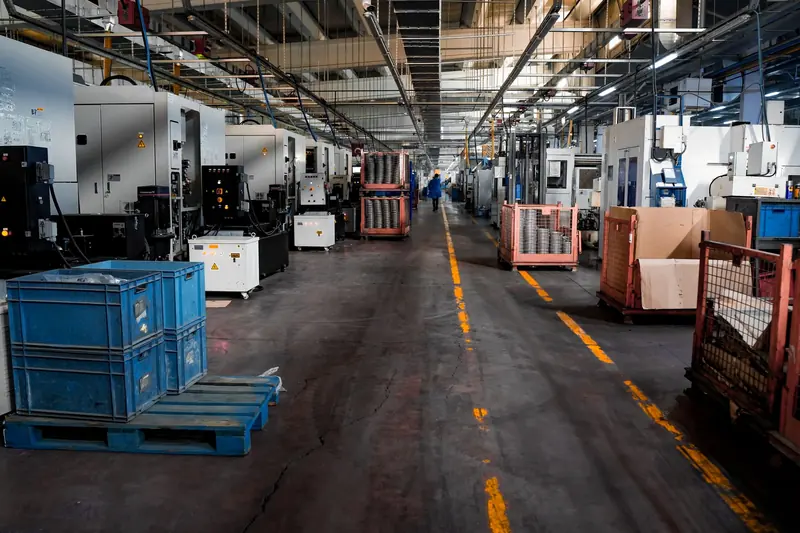
Ask a safety officer at any plant in Sahibabad, Greater Noida or Manesar what causes near-misses, and the answer is often the same: forklifts and pedestrians sharing unmarked space, pallets blocking walkways, and fire exits half hidden behind stock. Good warehouse floor marking costs a small fraction of the losses it prevents. This article explains how to plan a layout, which colours are commonly used, how to prepare the surface and how to choose paint so that your lines survive wheels, dust and daily cleaning.
What good floor marking should achieve
Think of floor marking as a visual instruction system. Done well, it does five things:
- Separates traffic. Forklift lanes and pedestrian walkways are clearly different.
- Defines storage. Pallet bays, racking footprints and staging areas have a fixed place.
- Protects safety equipment. Fire extinguishers, hydrants, first-aid points, electrical panels and emergency exits stay accessible.
- Controls flow. Arrows, stop lines and one-way routes reduce jams at junctions and docks.
- Supports housekeeping. A marked place for every item makes inspection and cleaning easier.
Plan your warehouse floor marking layout before picking up a brush
The most common mistake is to start painting before the layout is agreed. A few hours of planning with the safety team, operations head and a floor plan saves repainting later.
- Draw the current flow. Mark where goods enter, where they are stored, picked, packed and loaded.
- Fix aisle widths. Aisles should suit your largest vehicle plus clearance. Measure the forklift or pallet truck and the largest load, and add a safe margin. Check your racking supplier and equipment manual for turning width.
- Separate people from vehicles. Provide walkways along walls and across junctions at marked crossings.
- Locate safety items. Keep clear zones in front of fire exits, extinguishers and panels. Refer to the National Building Code of India 2016 Part 4 and your fire safety officer for exit and access needs.
- Number the bays. Use a simple numbering plan that matches your warehouse management system or stock sheets.
Common colour practice
There is no single colour code that every Indian warehouse must follow. Many plants adopt an internal standard and display it on a chart at the gate. The table below shows widely used practice, which you can adapt. Confirm any statutory requirement with your safety officer.
| Colour | Common use |
|---|---|
| Yellow | Aisle edges, traffic lanes, general caution |
| White | Storage bays, pallet positions, racking footprints |
| Green | Safe zones, first-aid, safety equipment, finished goods |
| Red | Fire equipment, hazards, rejected or quarantine stock |
| Blue | Raw material, work in progress, maintenance areas |
| Black and yellow stripes | Physical hazards, edges, low clearance, dock edges |
Whatever scheme you choose, keep it consistent across all sheds, and train new staff and contractors on it during induction.
Surface preparation: why most lines peel
Lines peel for the same reasons paint peels from any floor: dust, oil, moisture and a weak surface. Before marking:
- Sweep and vacuum the area. Dust under paint acts like a release layer.
- Degrease oily patches, especially near machines and dock doors.
- Remove old, flaking lines by scraping or grinding.
- Check that the floor is dry. A damp slab traps moisture and lifts paint.
- If the floor is bare concrete and dusting, consider sealing or coating the whole floor first, then marking on top.
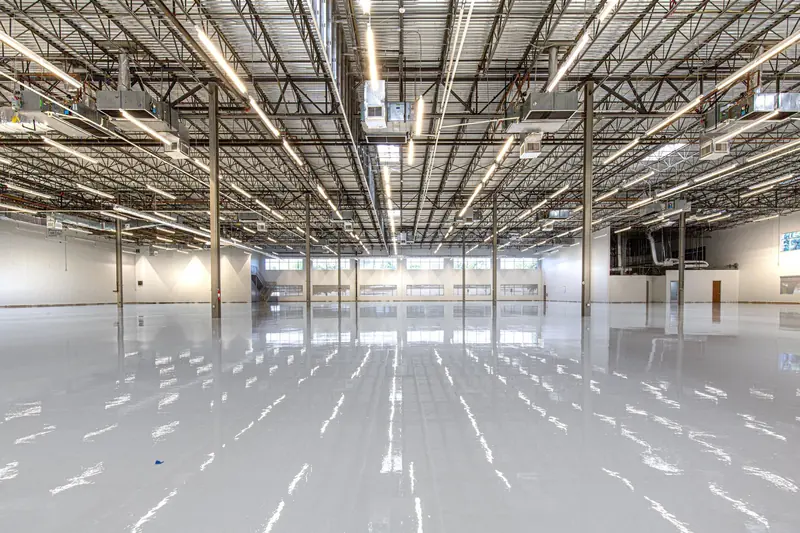
Lines applied over a well-cured epoxy floor coating last longer than lines on raw power-floated concrete, because the base is smoother, harder and sealed. This is why many plants now coat the floor and mark it in the same programme. You can see the range of floor products we supply on our products page.
Choosing paint for marking
Options vary in durability and cost. Match the product to the traffic and surface.
Epoxy marking paint
A two-pack epoxy gives a hard, abrasion-resistant line and bonds well to prepared concrete and epoxy floors. It is a good choice for forklift lanes and busy aisles. It can chalk in strong sun, so for sunlit docks a polyurethane marking finish may hold colour better.
Polyurethane marking paint
A PU finish retains colour and gloss better in sunlight and tolerates thermal movement. It is useful for open loading areas and semi-outdoor yards.
Water-based and general floor paints
These are easier to apply and may be fine for light-traffic areas, offices and corridors, but they wear faster under wheels. They are not usually the best option for forklift lanes.
Floor marking tape
Adhesive tape is fast and useful for temporary layouts, but edges lift under wheels and in dusty or damp floors. For permanent lanes, painted lines last longer.
Jotun sells epoxy and polyurethane products through authorised dealers, and availability depends on stock. Your supplier can suggest a suitable product from the Jotafloor and related families for your floor type; always confirm details with the product data sheet.
Applying the lines properly
- Mark out the layout using a chalk line, measuring tape and a laser level for long runs.
- Mask the edges of lines with good-quality masking tape pressed down firmly to avoid bleeding.
- Prime if the data sheet requires it, especially on dusty or porous concrete.
- Mix two-pack paint exactly in the ratio given, and use it within pot life.
- Apply with a short-nap roller, a line-marking machine or a brush for corners. Work in even strokes and avoid thick buildup.
- Remove masking tape while the paint is still slightly soft to give clean edges.
- Keep wheels and feet off until the data sheet allows light traffic, and longer before heavy use.
Choose cooler hours in summer, since fast drying can leave brush marks. In winter, avoid foggy mornings, as moisture on the floor will damage adhesion. In the post-monsoon months, check for lingering damp before painting.
Typical line widths and symbols
Line widths vary with practice and the site, but many plants use wider lines for aisle edges and thinner lines for bay boundaries. Larger plants and high-speed lanes benefit from wider, more visible lines. Corner marks, such as L-shapes or T-shapes, outline pallet positions without painting a full box and save time on repainting. Arrows, stop lines, pedestrian crossing stripes and bay numbers should be large enough to read from a moving forklift seat. Use stencils so that symbols look identical across the warehouse.
Special zones: docks, racking and pedestrian crossings
Some areas need more than a simple line. At loading docks, mark a clear no-storage strip near the dock edge and use black and yellow hazard stripes at the drop. Near truck bays leave a marked waiting zone so vehicles do not block internal lanes. Under racking, mark the footprint of each upright so that forklifts keep a safe distance and base plates are not struck. At every point where a pedestrian walkway crosses a vehicle lane, paint a striped crossing with stop lines on both sides, and add mirrors or signage where visibility is poor. Staging and quarantine areas should have a fully outlined box with a label painted or fixed beside it, so that rejected goods do not drift back into normal stock.
Do not forget electrical panels, fire hose reels and emergency stop buttons. A box of clear floor, often marked in red or with hatching, in front of each item tells everyone that nothing should be stacked there. Review these zones with your fire safety officer before painting, and walk the warehouse again after the first week to see whether workers actually follow the layout or whether an adjustment is needed.
Maintaining your warehouse floor marking
Lines wear fastest at junctions, docks and turning points. Inspect these every few months. Clean the floor with a scrubber before repainting to ensure adhesion. Plan to refresh heavily trafficked lines on a regular cycle rather than wait until they vanish. When you re-coat the floor, include the marking in the same plan so you do not paint twice.
Mistakes to avoid
- Painting lines on dusty, oily or damp concrete.
- Making aisles too narrow for the largest vehicle.
- Using different colour meanings in different sheds.
- Marking fire exits and extinguisher areas but then storing stock on them.
- Using water-based paint on forklift lanes.
- Skipping masking, which gives wavy, unprofessional lines.
How to get started: what to tell us when you call
VTech Solution is an authorised Jotun distributor and dealer at Site IV, Sahibabad Industrial Area, Ghaziabad. We supply warehouses and factories across Delhi, Noida, Greater Noida, Ghaziabad, Gurgaon and Faridabad. For advice on warehouse floor marking, share:
- Floor area, and whether the floor is bare concrete, coated or tiled.
- The traffic type: pedestrians, trolleys, forklifts, trucks.
- Indoor or semi-outdoor, with sunlight exposure.
- Colours you plan to use and approximate line length.
- Whether you also plan to coat the floor first.
Prices depend on product, pack size and current rates, and are quoted on the call. See our industrial solutions, visit the contact page, or call +91 98111 70042 to plan your marking project.
Frequently asked questions
What paint is best for forklift lane marking?
A two-pack epoxy marking paint on a clean, sound surface is common for forklift lanes because it resists abrasion. In sunlit areas, a polyurethane marking finish holds colour better. Check the product data sheet and ask your supplier to match the paint to your floor and traffic.
How wide should aisle lines be in a warehouse?
There is no single required width. Many plants use wider lines for aisle edges and thinner ones for bays, sized so they can be seen from a moving vehicle. Decide with your safety team, and make sure aisle width itself suits your largest equipment.
Can I paint lines directly on bare concrete?
You can, but durability is lower, especially if the concrete is dusty or oily. Clean, degrease and, if needed, prime the surface. Marking over a coated epoxy floor usually lasts longer because the base is sealed, harder and smoother.
Is there a mandatory colour code for floor marking in India?
There is no single colour code every warehouse must follow. Many plants use an internal standard such as yellow for lanes, white for bays and red for fire equipment. Check with your safety officer and fire guidance, and apply your scheme consistently.
How often should floor markings be repainted?
It depends on traffic, paint type and cleaning. Junctions, docks and turning points wear first, so inspect them every few months and touch up early. Planning a regular refresh is cheaper than repainting after the lines have disappeared.