What is epoxy flooring for factories and when do you need it?
Epoxy flooring for factories is a hard, seamless resin coating applied over concrete. It stops dust, resists oil and chemical splashes, handles trolley and forklift traffic, and makes floors easy to clean. You need it when bare concrete is dusting, staining or breaking down under daily plant use.
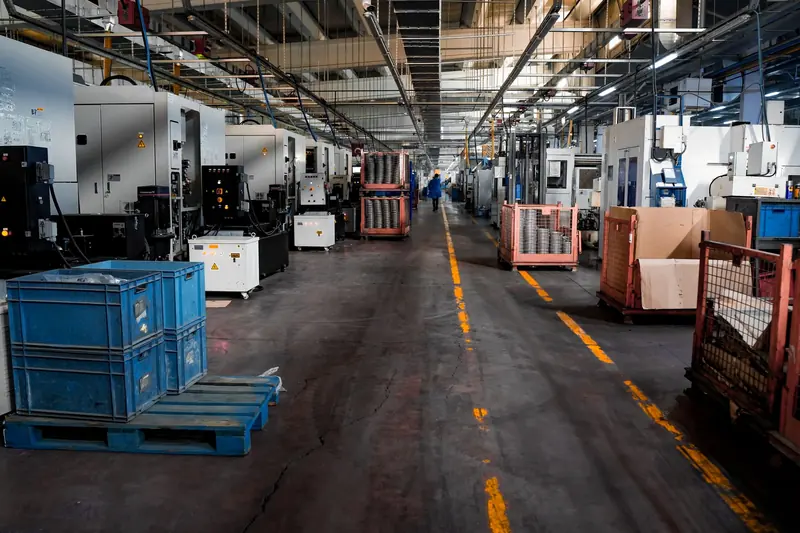
Walk through any factory in Sahibabad, Loni or Bawana and you will see the same floor problems: fine grey dust that settles on every machine, oil patches that never wash out, and edges of joints that crumble under pallet trucks. Epoxy flooring for factories solves most of these problems when the system is chosen well and applied on a properly prepared slab. This guide explains how the systems differ, what Delhi NCR conditions do to a floor, and how to plan the job so that the coating lasts.
Why bare concrete fails in an NCR factory
Plain power-floated concrete is porous. Over time the cement paste on the surface wears away and the floor starts to dust. In a production hall this dust is more than a housekeeping problem. It enters bearings, spoils packaging, contaminates food and pharma lines, and gets into electronic assemblies. Dust also makes the floor slippery when a little oil or water is present.
Delhi NCR adds its own stress on top of normal wear:
- Summer heat. Slab surface temperatures in sheds with metal roofing can rise far above air temperature in May and June. This affects the working time of resin and the way it cures.
- Winter cold and fog. December and January mornings can be cold and damp. Low temperature slows curing, and moisture on the slab can ruin adhesion.
- Monsoon humidity. High humidity and a damp slab are the most common reasons for bubbles and peeling on floors laid between July and September.
- Industrial dust and fumes. Plants near Surajpur, Greater Noida and Faridabad often deal with abrasive dust, coolant, cutting oil and washdown water on the same floor.
For most plants, epoxy flooring for factories is the practical fix, because a well-chosen epoxy system seals the surface, locks in the cement dust and gives you a film that can be mopped, scrubbed and re-marked without breaking down.
Types of epoxy flooring for factories
There is no single product called factory epoxy. The right system depends on traffic, chemicals and how smooth you want the finish. The common options are below.
Thin-film coating
A primer plus one or two coats of pigmented epoxy, usually a fraction of a millimetre to about a millimetre thick in total. It is suitable for light-traffic areas, storage bays, corridors and offices within the plant. It gives dust control and a cleaner look at lower cost, but it is not meant for heavy impact.
Build-up or high-build coating
A thicker film, often built in multiple coats, for medium-duty production areas. It handles trolley wheels and occasional pallet truck movement better than a thin-film coat.
Self-levelling epoxy screed
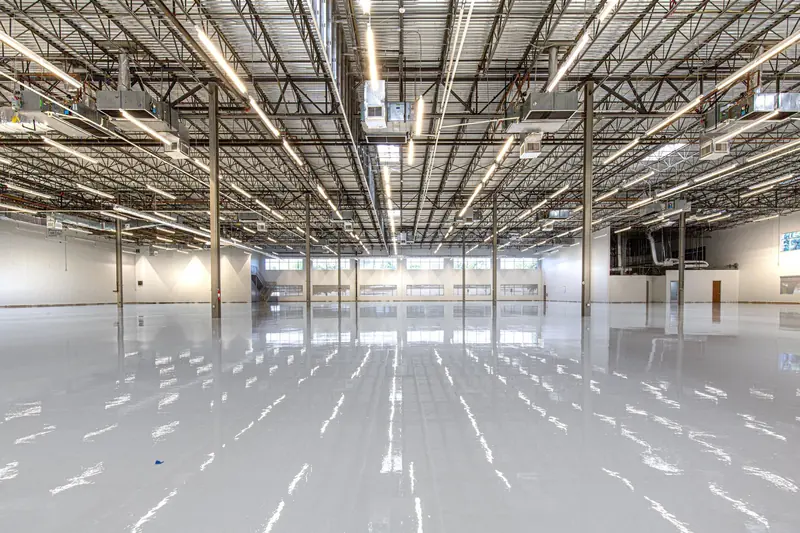
A flowing epoxy layer, commonly in the range of 2 to 4 mm, that gives a smooth, glossy and almost seamless surface. It is chosen for assembly lines, electronics, packaging and pharma-support areas where cleanability matters. The slab must be flat and sound, because a self-levelling floor will show every defect underneath.
Mortar or broadcast systems
Epoxy mixed with graded sand, or broadcast with aggregate, to form a heavy-duty and slip-resistant layer. This is used in loading bays, wash areas, workshops and places with steady forklift traffic.
Jotun supplies epoxy flooring products under the Jotafloor family. Which Jotafloor product suits your hall depends on the traffic and chemical load, and the data sheet sets the allowed thickness, mixing ratio and recoat times. Check the current product data sheet before you finalise any specification.
Matching the system to the area
Most plants that invest in epoxy flooring for factories need more than one system. Using a heavy mortar floor in a light packing area wastes money, while a thin coat in a forklift lane fails within a season. Use this table as a starting point for discussion, not as a final specification.
| Area in the plant | Main stress | Typical system direction |
|---|---|---|
| Offices, corridors, light storage | Foot traffic, dust | Thin-film epoxy coating |
| Assembly and packing lines | Cleanability, light trolleys | Self-levelling epoxy |
| Machine shop and workshop | Oil, coolant, point loads | High-build or mortar epoxy |
| Loading bays and forklift lanes | Impact, abrasion, turning wheels | Heavy-duty mortar or broadcast system |
| Wash areas and chemical zones | Splashes, wet cleaning | Chemical-resistant epoxy with slip resistance |
Surface preparation decides the result
Most epoxy floor failures trace back to the slab and not to the product. Before any coating goes down, the concrete should be checked and prepared in this order:
- Check the concrete. Look for weak, powdery or oil-soaked areas. New slabs should be properly cured before coating, and the data sheet will state the minimum age and strength expected.
- Remove contamination. Oil, grease, curing compounds and old paint stop adhesion. Degrease and remove them, and cut out areas that are deeply soaked.
- Mechanical preparation. Diamond grinding or shot blasting opens the surface and removes laitance. Acid washing is not a good substitute for mechanical preparation on industrial slabs.
- Repair cracks and joints. Fill cracks, broken edges and spalled patches with a suitable repair mortar or epoxy filler. Decide early how expansion and saw-cut joints will be treated.
- Test moisture. A damp slab is the single biggest cause of blistering. Measure moisture before coating, and do not apply on a slab that is above the limit given in the data sheet.
- Vacuum clean. Dust left on the slab acts as a release layer. Vacuum, not sweep.
You can look at the range of Jotun protective and floor coating products we supply, then discuss your slab condition with our team.
Application conditions in Delhi NCR
Epoxy is a two-pack material. Once the base and hardener are mixed, the clock starts, and temperature controls how fast it runs. In peak summer the pot life can be short, so mixing in small batches, keeping material in shade and working in the cooler early hours helps. In winter the floor may need to be warmed or the job planned for the warmer part of the day, because low temperature can stop proper curing.
Watch for these site conditions:
- Surface temperature should be at least a few degrees above the dew point, or condensation will form on the slab.
- Do not coat when rain, high humidity or a wet slab is expected during the cure period.
- Keep the area ventilated, and keep ignition sources away while solvent-containing products are in use.
- Protect fresh coating from dust, water and traffic until the data sheet allows light and full use.
Curing, downtime and planning around production
Factory owners often ask how soon the floor can be used. The honest answer is that it depends on the system, thickness and temperature. Light foot traffic may be possible after a day, while full chemical and vehicle loading normally needs several days. Plan the job in zones so that production can shift from one bay to another. Many plants in Noida and Greater Noida schedule floor work over a long weekend or a planned shutdown for this reason.
Ask for a written sequence that shows preparation days, coating days, curing days and the date of full loading. A clear schedule avoids the common problem of forklifts being driven onto a floor that has not reached its strength.
Common mistakes to avoid
- Choosing the cheapest coating without checking the traffic type.
- Skipping shot blasting or grinding because the slab looks clean.
- Ignoring a damp slab or a rising-damp problem from the ground.
- Mixing by eye instead of by the stated ratio and with a slow-speed mixer.
- Applying thick in one pass when the data sheet asks for coats.
- Forgetting joints, so that cracks reflect through the new floor.
- Opening the floor to heavy loads too early.
What affects the cost
The price of epoxy flooring for factories per square foot is not a fixed number, and anyone who quotes one without seeing your floor is guessing. The main cost drivers are the system thickness, the condition of the slab, the amount of repair work, the area, the pack sizes needed and the current product rates. Supply and application are often separate lines, so ask whether you are buying material only or material with a trained applicator. At VTech we quote material pricing on the call, based on product, pack size and current rates, and availability depends on stock.
How to get started: what to tell us when you call
VTech Solution is an authorised Jotun distributor and dealer at Site IV, Sahibabad Industrial Area, Ghaziabad. We have served Delhi NCR since 2011, including Ghaziabad, Delhi, Noida, Greater Noida, Gurgaon and Faridabad. To help us suggest the right system quickly, keep these details ready:
- Floor area in square feet and the number of separate zones.
- Type of activity: production, storage, wash area, cold room, loading bay.
- Vehicles and loads: forklifts, pallet trucks, trolleys, and approximate weights.
- Chemicals, oils or hot washdown the floor sees.
- Present condition: new slab, old coated floor, dusting, cracked or damp.
- Your preferred colour, gloss or slip resistance, and your shutdown window.
You can browse our industrial solutions, learn about VTech, or send details through the contact page. For a faster answer, call +91 98111 70042 and we will help you shortlist the right Jotafloor system for your plant.
Frequently asked questions
How long does epoxy flooring last in a factory?
Life depends on the system, slab condition, traffic and maintenance. A properly prepared slab with a suitable system can give many years of service, while a thin coat under forklift traffic may wear out quickly. Correct preparation and matching the system to the load matter more than any single brand claim.
Can epoxy be applied over an old concrete floor?
Yes, if the old slab is sound, clean and dry. Oil, old paint, laitance and weak patches must be removed by grinding or shot blasting, and cracks must be repaired. A damp or crumbling slab should be fixed first, or the new coating will blister or peel.
Is epoxy or polyurethane better for a factory floor?
Epoxy is the common choice for hard-wearing, chemical-resistant industrial floors. Polyurethane systems are used where more flexibility or better UV and thermal tolerance is needed. The best choice depends on traffic, chemicals, temperature swings and exposure to sunlight, so describe your area before deciding.
When is the best time to lay an epoxy floor in Delhi NCR?
October to March is usually easier, with moderate temperatures and low humidity, though cold winter mornings need care. Peak summer shortens pot life and monsoon humidity risks damp slabs. Good planning, moisture testing and temperature control let you coat in any season.
How do I get a price for epoxy flooring from VTech?
Prices depend on the product, system, pack size and current rates, so they are quoted on the call. Share your floor area, slab condition and usage details on +91 98111 70042 or through the contact page, and our team will suggest a suitable Jotafloor system and quote.