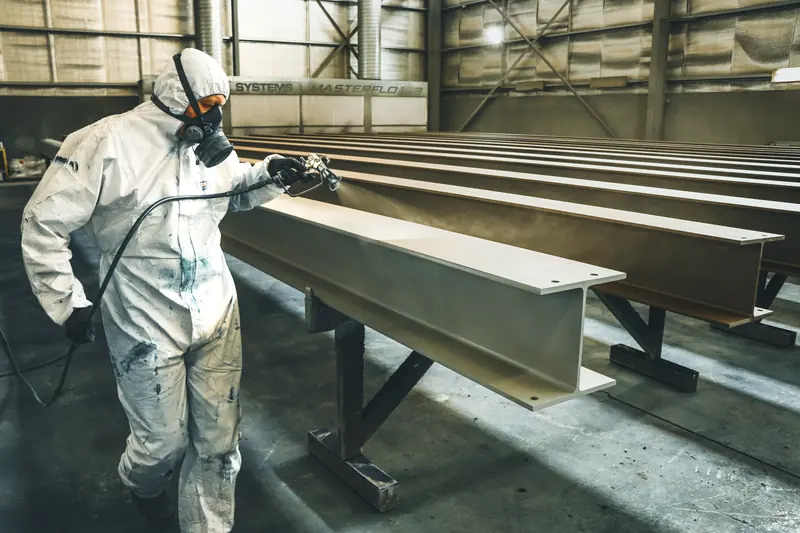
What are the main safety risks of airless spraying?
The biggest risks are high-pressure fluid injection through skin, fire or explosion from solvent vapour and static, breathing vapour and mist, and working in confined spaces. Use the right PPE, ground all equipment, ventilate well, relieve pressure before service, and follow the Graco manual. Injection injury needs urgent medical help.
Airless spraying is fast and efficient, and that is exactly why it deserves respect. The fluid leaves the tip at very high pressure, many coatings carry flammable solvents, and sites in Delhi NCR often have heat, dust and limited ventilation. A relaxed attitude toward any of these can end in a serious injury or a fire.
This guide is general safety guidance for contractors, supervisors and factory teams in India. It does not replace the Graco manual for your model, the safety data sheet of the coating, your company safety rules, or applicable regulations. Read all three before the crew starts work.
High-pressure injection injury: the most serious hazard
Airless sprayers develop pressure high enough to push fluid through skin. An injection injury can look like a small cut or a minor bruise, but the coating or solvent underneath can cause severe tissue damage and may lead to loss of a finger or limb if treatment is delayed.
If any fluid is injected into the skin, seek medical help immediately. Go to a hospital at once and tell the doctor it is a high-pressure injection injury. Take the coating name or safety data sheet with you. Do not wait to see if it gets better, do not treat it as a simple cut, and do not suck or squeeze the wound.
Rules that prevent injection injuries
- Never put a hand, finger or any body part in front of the spray or near the tip.
- Never point the gun at yourself or at another person.
- Never try to stop or deflect a leak with a hand, glove or rag.
- Keep the tip guard and the trigger safety in place at all times.
- Engage the trigger lock whenever you stop spraying, even for a moment.
- Relieve pressure as the Graco manual describes before cleaning, changing a tip, or servicing any part.
- Use only hose, fittings and gun rated for at least the working pressure of the sprayer.
- Replace damaged hose at once. Do not tape or patch a leaking hose.
- Do not use a sprayer when you are unsure whether pressure remains in the system.
Personal protective equipment for spray crews
PPE is the last line of defence, not a replacement for safe equipment and procedure. Choose PPE according to the coating safety data sheet and your site safety officer.
| Item | Why it matters | Practical note |
|---|---|---|
| Respirator | Protects against vapour and paint mist | Cartridge type must match the coating; replace cartridges on schedule; a simple dust mask is not enough |
| Safety goggles or face shield | Protect eyes from mist and splash | Choose anti-fog types for Delhi NCR summer heat |
| Chemical-resistant gloves | Protect hands from solvents and coating | Gloves do not stop an injection injury |
| Coveralls | Reduce skin contact and contamination | Use anti-static or flame-retardant types where solvents are used |
| Safety shoes | Protect from drops and slips | Wet paint on steel is slippery |
| Hard hat and fall protection | Needed for work at height | Essential on roofs, gantries and scaffolds |
| Ear protection | Petrol engines and compressors are loud | Check the noise level near the unit |
Note that gloves and clothing do not protect against high-pressure injection. Only safe practice does.
Grounding and static electricity
Fluid flowing at speed through a hose and tip builds up static charge. With flammable solvents, a spark can ignite vapour. Grounding gives that charge a safe path away.
- Ground the sprayer as described in the Graco manual, using the grounding method the model requires.
- Use the conductive or grounded fluid hose and keep all hose connections tight.
- Ground the object being sprayed where relevant, such as steel structures and tanks, and ground metal pails used for solvent.
- Use only metal pails for flammable liquids, with grounding. Do not use plastic pails for solvent flushing unless the manual allows it.
- Do not use a plastic liner in a pail when flushing with flammable solvent unless it is approved.
- Check grounding continuity regularly, as a loose or corroded clamp does nothing.
- Avoid synthetic clothing in vapour-rich areas.
Fire and flammable solvents
Many industrial coatings and thinners are flammable. Vapour is heavier than air and collects at floor level, in pits and in low areas. Sparks, hot surfaces and open flames can ignite it.
- Keep ignition sources out of the spray area: no smoking, no welding or grinding nearby, no mobile phone use where the site rules forbid it.
- Switch off nearby electrical equipment that is not rated for the area, and use equipment suitable for the hazard classification of the area.
- Keep only the day’s quantity of coating and solvent near the work area. Store the rest in an approved, ventilated store.
- Keep fire extinguishers of the right type within reach, and know where they are.
- Never refuel a petrol sprayer or engine while it is running or hot, and keep the engine away from vapour and out of enclosed areas.
- Never use a petrol engine inside a closed shed, because exhaust gas contains carbon monoxide.
- Clean up spills at once with approved absorbent, and dispose of rags and waste properly. Solvent-soaked rags can ignite.
Summer in Delhi NCR adds risk. When the air passes 45 degrees C, solvent evaporates faster and metal surfaces get hot. Keep pails in shade and check that sprayers and fuel are not sitting in direct sun.
Ventilation and breathing protection
Spray mist and vapour are harmful to breathe. In an enclosed or poorly ventilated space they also build up to flammable levels.
- Provide fresh-air ventilation and mechanical extraction where needed, and keep air flowing away from the sprayer and crew.
- In a closed shed, open doors and use exhaust fans rated for the area.
- Match respirators to the coating, and train crew to fit-check them each time.
- Rotate crew in hot, vapour-heavy conditions and give regular water and rest breaks.
- In winter smog, dust and fumes combine; do not rely on a basic dust mask for spray work.
Confined spaces: tanks, pits, hulls and silos
Spraying inside a tank, vessel, silo or pit is among the most dangerous coating work. Solvent vapour can displace oxygen, collect in low spots and reach explosive levels very quickly.
- Follow a written confined space entry procedure and a permit-to-work system.
- Test the atmosphere for oxygen, flammable gas and toxic vapour before entry and during work.
- Use continuous forced ventilation and extraction.
- Use air-supplied breathing apparatus where the data sheet or procedure calls for it, not a basic cartridge respirator.
- Place the sprayer and engine outside the confined space.
- Keep a trained standby person outside with a rescue plan and communication. Never enter alone.
- Use explosion-proof lighting and equipment.
Working at height and on roofs
Airless spraying often takes place on roofs, scaffolds and lifts. Wet coating is slippery, wind carries spray, and hose can snag. Use harnesses and anchor points, edge protection, and a clear hose plan. Never work on a fragile roof sheet without crawl boards and fall protection. Pause work in strong wind or when lightning is near.
Site habits that keep crews safe
- Hold a short toolbox talk before each job covering the coating, the hazards and the emergency plan.
- Keep the safety data sheet of every coating on site.
- Inspect hose, gun, tip guard and grounding before each shift.
- Barricade the spray area and warn other trades.
- Use a first-aid kit and know the nearest hospital, which in industrial belts such as Sahibabad, Loni, Noida and Faridabad should be identified before work starts.
- Do not allow untrained people to run the sprayer.
- Report every near miss and fix the cause.
Power supply and electrical safety
Power cuts and unstable supply are normal in many industrial areas. Use correctly rated cables and plugs, keep connections dry in monsoon, and protect leads from foot and vehicle traffic. Do not splice cables on site. If you use a generator, keep it outdoors and well away from solvent vapour. Where mains power is unreliable, a petrol sprayer such as the 3900 Express/HD may suit, but then engine exhaust, fuel and heat become additional hazards to manage.
Choosing the right equipment helps safety
Using a sprayer that matches the job lowers the temptation to overpressurise or improvise. VTech Solution supplies Graco models from the portable Ultra Max 390 PC to the high-output GMAX II 3900, 5900 and 7900 and air-powered units such as the Contractor King 70 and GX 21. Explore our Graco airless sprayers and industrial solutions. Every machine comes with a manual that you must read, and our team can explain the key safety points during the discussion.
What to tell us when you call
- The type of coating and whether it is solvent-based or water-based.
- Where you will spray: open site, shed, tank, roof or confined space.
- Power supply available and whether you need a petrol unit.
- Number of operators and their experience level.
- Hose length and the height or access method.
- Any site safety requirements from your client or consultant.
We will help you choose suitable equipment and answer practical questions. Prices are quoted on the call, and warranty depends on the model and is confirmed when quoting.
Talk to VTech Solution
VTech Solution has been an authorised Graco distributor in Sahibabad Industrial Area since 2011. For equipment advice, call +91 98111 70042 (Monday to Saturday, 10am to 6pm IST) or email sales@vtechsolution.co.in. In any injury or fire emergency, call local emergency services first.
Frequently asked questions
What should I do if paint is injected into the skin by an airless sprayer?
Treat it as an emergency. Seek medical help immediately, even if the wound looks small. Tell the doctor it is a high-pressure injection injury and take the coating name or safety data sheet. Do not wait, do not treat it as a simple cut.
Why is grounding important when spraying with an airless sprayer?
Fluid moving through hose and tip builds static charge, which can spark and ignite flammable solvent vapour. Grounding the sprayer, hose, metal pails and the object sprayed gives the charge a safe path. Follow the grounding steps in the Graco manual.
What PPE is needed for airless spraying?
Typically a respirator matched to the coating, goggles or a face shield, chemical-resistant gloves, coveralls, safety shoes and ear protection, plus fall protection at height. Gloves do not stop injection injuries. Check the coating safety data sheet and site rules.
Is it safe to use a petrol airless sprayer indoors?
No. Petrol engines give off carbon monoxide and can ignite solvent vapour. Run them only in open, well-ventilated air, away from vapour, and keep the engine outside any shed or confined space. Never refuel a hot or running engine.
Can I clear a blocked tip while the sprayer is pressurised?
No. Always relieve pressure first by the procedure in the Graco manual, then engage the trigger lock before touching the tip or guard. Clearing a tip under pressure is a common cause of high-pressure injection injury.